
"tropical highland coffee"
1000 article(s) found
Indonesian coffee bean variety coffee extraction coffee network coffee bean price
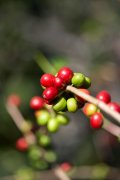
Varieties of coffee cherries: Arabella species, Libiga species, Romsda varieties of coffee beans: blue Mountain, Mocha, Brazil, Santos, Colombia, Mantra, Guatemala, Romsda Coffee Tree is a small shrub growing in the tropical highlands, its fruit is red or yellow, and the seeds inside are what we call coffee beans. At present, about 66 countries around the world grow coffee.

Main producing areas and characteristics of coffee
Coffee production zones (commonly known as coffee belts) range from 25 degrees north latitude to 30 degrees south latitude, covering many countries in Central, West Africa, the Middle East and South Asia, the Pacific, Latin America and the Caribbean. The reason why coffee cultivation is concentrated in this area is mainly due to the limitation of temperature. Because coffee trees are vulnerable to frost, neither north nor south latitude is suitable, especially in the tropics.
Boutique Coffee Science explains the varieties and characteristics of coffee in detail
Varieties of coffee cherries: Alabila species of Libiga species of Romda kinds of coffee beans: blue Mountains, Mocabas, Santos, Colombia, Mantra, Colombia, Mara Romsda Coffee is a small shrub growing in the tropical highlands, its fruit is red or yellow, and the seeds inside are what we call coffee beans. At present, coffee beans are grown in about 66 countries in the world, and among them
Colombia Coffee Bean Characteristics Varieties and characteristics of coffee beans Colombia Coffee Bean Flavors
Coffee cherry varieties: Arabilla seeds Libby seeds Romstar seeds Coffee beans varieties: Blue Mountain mocha Brazil Santos Colombia Manterelin Guatemala Romstar coffee trees are small shrubs grown in tropical highlands, their fruits are red or yellow, the inner fruit is what we call coffee beans. Coffee is grown in 66 countries worldwide.

Introduction to the characteristics of coffee flavor and taste of Paradise Bird Manor in Papua New Guinea with cocoa flavor
Located in tropical Papua New Guinea, the climate is humid and rainy, rich in coconuts and coffee. Forests and mineral resources are also rich. Rabur is the sixth largest town in the South Pacific island nation and an important shipping hub. Its rich coffee and other goods are exported from this port. Papua New Guinea has a detached and primitive natural environment and its land is vast and fertile. Its unique volcano

Where is the Amiagro Coffee Manor in Amiago, Guatemala? introduction to the famous coffee producing areas in Guatemala
Professional coffee knowledge exchange more coffee bean information please follow the coffee workshop (Wechat official account cafe_style) Guatemala Coffee SHB EP Origin: Guatemalan Manor / exporter: AMIAGRO varieties: Bourbon,Caturra,Catuai Craft: washing there are many famous and most distinctive coffee produced in the Guatemalan plateau. Guatemala is located in the tropics.

The planting temperature of coffee tree is between 15 degrees and 25 degrees.
The origin of the coffee tree is Ethiopia in Africa. In botany, coffee trees belong to the evergreen trees of the subgenus Rubiaceae, and coffee beans, commonly known as coffee beans, are actually the seeds of the fruit of coffee trees. They are called coffee beans only because they are shaped like beans. Climate is the decisive factor for coffee cultivation. Coffee trees are only suitable for growing in the tropics or subtropics, so latitude 25 degrees south and north.

Coffee beans? Cocoa beans? Systematic introduction of Coffee beans
Many people like coffee very much, so what does coffee beans look like? Are coffee beans and cocoa beans the same thing? The coffee beans can be traced back to millions of years ago, in fact, the real age when it was discovered can no longer be tested. It is only said that coffee is a man named Ko in the Ethiopian highlands.

Slightly bitter, full-bodied, refreshing Vietnamese coffee flavor, characteristics, taste
Vietnamese coffee has a strong flavor, light sour taste, smooth and moist taste, slightly bitter in mellow, full-bodied, refreshing and refreshing. The representative products are moossy Coffee, Central Plains Coffee (G7 coffee), Saigon Coffee (SAGOCAFE) and Highland Coffee. Vietnam's geographical location is very favorable for coffee cultivation. Southern Vietnam has a hot and humid tropical climate, which is suitable for growing ROBUSTA coffee.

Main producing areas and characteristics of Fine Coffee
Coffee production zones (commonly known as coffee belts) range from 25 degrees north latitude to 30 degrees south latitude, covering many countries in Central, West Africa, the Middle East and South Asia, the Pacific, Latin America and the Caribbean. The reason why coffee cultivation is concentrated in this area is mainly due to the limitation of temperature. Because coffee trees are vulnerable to frost, neither north nor south latitude is suitable, especially in the tropics.

The shape of Honduran coffee beans introduces the flavor of highland coffee.
The granules of coffee beans in Honduras are large in shape, uniform in size and glossy in color. In order to facilitate harvesting, farmers will prune the coffee trees to no more than 150 centimeters, because if they grow too high, they have to set up ladders to pick, which is not only time-consuming, but also may damage the trees by bending branches. As the ripening period of each fruit of the coffee bean is different, it is necessary to keep the coffee bean in good condition.

Introduction to the sweetness of moderate baking in Honduras and the course of brewing moderate roasted coffee powder
Honduras is located in the north of Central America, facing the Caribbean Sea to the north, the Gulf of Fonseca in the Pacific Ocean to the south, Nicaragua and El Salvador to the east and south, and Guatemala to the west, mostly mountains and plateaus. It has a tropical climate, mild temperature and abundant rainfall, so it is an ideal place for coffee growth. From its independence in 1821 to 1978, there have been 139 coups in Honduras.

The planting conditions of high-quality coffee beans and common sense coffee trees
The origin of the coffee tree is Ethiopia in Africa. In botany, coffee trees belong to the evergreen trees of the subgenus Rubiaceae, and coffee beans, commonly known as coffee beans, are actually the seeds of the fruit of coffee trees. They are called coffee beans only because they are shaped like beans. Climate is the decisive factor for coffee cultivation. Coffee trees are only suitable for growing in the tropics or subtropics, so latitude 25 degrees south and north.

The growth habit of coffee the process of the growth of coffee trees.
Coffee trees belong to the evergreen family of Akanaceae. They are tropical plants and are not cold-tolerant. Most of them are planted in areas with elevations of 300,400m, and also in highlands with elevations of 2000-2500 meters. But those who plant on slopes above 1500 meters above sea level have better quality. Coffee trees are most suitable for growing at an average temperature of about 20 degrees Celsius and an annual precipitation of 1500-2000 mm.
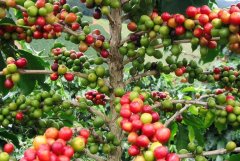
Nicaragua and Lemon Manor Nicaragua is located in central Central America, which is the largest in China and the United States.
Nicaragua, located in the middle of Central America, is the largest country in China and the United States, bordering Honduras in the north, Costa Rica in the south, the Caribbean Sea in the east and the Pacific Ocean in the west. The eastern part is the coastal plain, the high temperature and rainy climate belongs to the tropical maritime climate, and the western part is the coastal lowland with more active volcanoes. The north-central part is a highland, with an average annual temperature of 18 ℃ and an annual precipitation of 1500-2500mm.
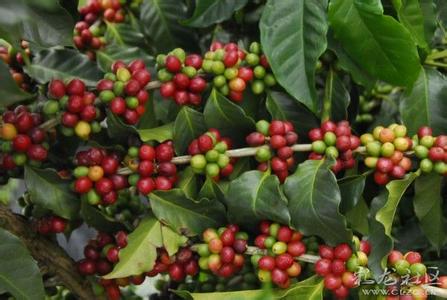
The most important type of coffee in the world-the distribution and growth habits of coffee
Coffee distribution: coffee trees grow in the tropical or subtropical regions of the tropical or subtropical regions with the equator as the center and between the latitudes of 25 degrees south and north. At present, coffee is produced in more than 60 countries, widely distributed in South America, Central America, the West Indies, Asia, Africa, Arabia, the South Pacific and Oceania. In terms of output, Pakistan, which accounts for the largest output in the world,

Peruvian Yanisha Cooperative washing G1 Coffee Flavor Peruvian Organic Coffee beans
For more information on coffee beans, please pay attention to the coffee workshop (Wechat official account cafe_style) Peru is located in western South America, with a coastline of 2254 kilometers, dry and mild climate, suitable for coffee cultivation, and other natural environments, including the world's longest Andes, tropical rain forests, unique hills, dry deserts and so on.

Coffee leaf rust symptoms robusta coffee bean characteristics what is Arabica
Explanation of the nouns of raw coffee beans (Arabica v.s. Robusta): coffee tree, evergreen tree of Rubiaceae, Rubiaceae has many medicinal plants, such as quinine, Dugan and so on. Most coffee trees on earth are planted in the highlands between the Tropic of Cancer and the Tropic of Cancer, so this area is also known as the "coffee belt". The coffee beans we use to brew coffee are the seeds in the fruit of the coffee tree.

Bitter fragrant Guatemala Antigua Flower God Coffee Grinding characteristics introduction to the taste of varieties in producing areas
All of Guatemala is made up of mountains and plateaus. There are Kuchu Matanes Mountains in the west, Madre Mountains in the south, volcanic belts in the west and south, with more than 30 volcanoes. Tahumurco volcano is 4211 meters above sea level, which is the highest peak in Central America. Earthquakes are frequent. There are Petten lowlands in the north. There are narrow coastal plains on the Pacific coast. The major cities are mostly distributed in the intermountain basins in the south. Its